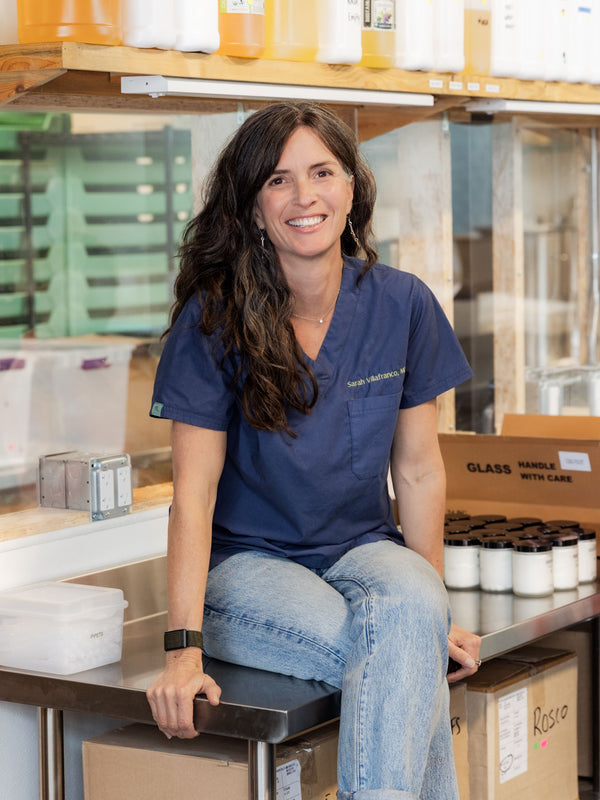


Recently I’ve been getting questions from our customers about “old person smell” and about a specific persimmon soap they’ve seen on their Instagram feeds that claims to eliminate 97% of the compound they say causes the odor. Since I’ve been spending a lot of time with my Dad lately—he’s 86 and smells pretty darn fresh some days and not so fresh other days—I wondered if this idea of a specific compound being responsible for “old people smell” was valid. I took a deep dive into the available research, and here’s the punchline: the science behind that claim is surprisingly weak.

What Is “Old Person Smell,” and Is It Actually Real?
I’ve taken care of a LOT of elderly people, from my dad (pictured above) to tons of patients in the emergency department. Some of them smell absolutely fine, some have a less pleasant odor. But, in my opinion, which is a pretty educated one, there is no single Old Person Smell. All old people smell different, some good and some bad. While there is some evidence that body odor changes with age, that is very different from saying all older people share one characteristic smell—or that one molecule is responsible for it.
What Is 2-Nonenal, and Does It Really Increase With Age?
There is evidence that a compound called 2-nonenal (or trans-2-nonenal) can (but does not always) increase with age and may contribute to (but not singularly cause) changes in body odor in older adults. The study responsible for bringing this to light was published in the Journal of Investigative Dermatology in 2001, and was conducted by researchers at Shiseido, a Japanese cosmetic company. This small study of 22 subjects showed that when lipids (fats) on the skin became oxidized, a greasy/grassy-smelling compound called 2-nonenal formed, and they observed that the “amount of 2-nonenal showed a tendency to increase with aging.”
To summarize, this is a 25-year-old study of 22 people, sponsored by a cosmetic company, that showed a compound with a “tendency” to increase over the age of 40. Strangely, despite this “discovery,” there are almost no studies in the literature since then. One of the few studies I found looked at using an antifungal soap on a group of 54 elderly people who bathed twice a week, and did not even mention 2-nonenal as one of the nine body odor compounds (VOCs) detected. Doesn't it seem like if a distinct “old person smell” had been definitively established, and its cause clearly identified, there would be a LOT more scientific studies to support and further investigate it by now?
How Strong Is the Evidence That 2-Nonenal Causes “Old Person Smell”?
Not strong at all. Sadly, one company is making the claim on the internet that “old person smell” is caused by one compound, and more and more people have come to believe it as truth, when the science supporting the claim is old and tentative. My take, after hours of online research, is that 2-nonenal is one of many compounds that can contribute to an unpleasant odor in elderly people, and that a tentative scientific finding has been turned into a much stronger marketing claim than the evidence supports.
It’s also worth noting, because I’ve heard this floating around Instagram, that there is nothing special about the skin at the base of your skull or behind your ears that causes “old person smell.” The skin at the base of the skull has a high density of sebaceous and eccrine glands, so it was used as a testing site in one small study, but there is no “old person smell gland” there. Those areas can also be easy to miss when washing, so if odor-producing compounds have accumulated there, they may be more likely to stay in those areas.
Does Persimmon Soap Really Remove 2-Nonenal?
One of the main companies selling persimmon soap claims that its product removes up to 97% of nonenal. The company says that number comes from testing at a partner lab in Japan, but I cannot find a publicly available, peer-reviewed study describing the test, its methods, or its results. If there is solid data behind the claim, I think it should be available for public and scientific review.
I’m sure persimmon soap removes 2-nonenal and other odor compounds perfectly well, but the science showing that persimmon specifically targets and removes 2-nonenal better than ordinary soap simply does not appear to exist in any publicly published form. To be clear, persimmon soaps have loads of great reviews, so please don’t misinterpret this article as saying “persimmon soap is bad,” because that’s not the message I’m sharing here. I’m simply answering the questions I keep getting asked.
This timeline of events is what makes me most uncomfortable:
1999–2001: Researchers at a Japanese cosmetics company identify 2-nonenal as a possible contributor to age-related body odor in a very small group of people. The company also coins the Japanese term for “aging odor” and goes on to develop and market products aimed at reducing or masking it.
2012: The only human study I can find that tested a persimmon-containing soap involved 20 men ages 43–75. They used a soap containing persimmon plus three other polyphenol-rich plant extracts every day for four weeks, and their levels of 2-nonenal decreased significantly. But there was no control group using the same soap without the polyphenol complex, the same soap with only persimmon extract, or an ordinary soap without persimmon, so the study cannot tell us whether persimmon was responsible for the improvement, or whether simply washing every day would have produced a similar result.
2014–present: Persimmon soaps aimed at “aging odor” become increasingly common in the U.S., and some brands begin using terms like Nonenal® and “Nonenal® Aging Odor” in their marketing. One company has even filed a U.S. trademark application for the word NONENAL in connection with soaps, body washes, cosmetics, and related products. Meanwhile, numerous similar products now repeat many of the same claims—claims that appear dramatically stronger than the publicly available science supporting them.
Can Regular Soap Remove 2-Nonenal Too?
There really isn’t any good published data available to answer this question. The persimmon soap company says that “other” soap only removes 35% of 2-nonenal, but also describes “other” soap as “not tested,” “not approved,” and “chemical.” I’m not sure what “other” soap they tested, because the data is not publicly available.
My common-sense approach is this: in order for 2-nonenal to form, you must have lipids (fats) on your skin that become oxidized. When you wash your skin with soap, you remove a good number of those surface lipids, along with any associated odor compounds that have formed. If you do this regularly—showering once a day, for example—you’re regularly removing both the material that can form 2-nonenal and whatever 2-nonenal has already accumulated on your skin. Ordinary soap (and Osmia soap) is specifically designed to emulsify and remove oils from skin, and does so very effectively.

What Else Causes Body Odor in Older Adults?
Soooo many things cause body odor—in so many age groups!! There are literally thousands of volatile organic compounds produced by the human body, and many of them can contribute to the way we smell.
Less Frequent Bathing and Changes in Hygiene
My dad, for reasons I don’t totally understand, does not like taking showers anymore. It could be because his body is stiff and weak, and it takes too much effort. It could be because he’s happy watching the news or Murder, She Wrote (he’s obsessed!). Or it could be because his sense of smell is essentially nonexistent, so he doesn’t know when he’s starting to smell a little ripe. Reduced hygiene and/or resistance to bathing is also very common with cognitive illnesses like Alzheimer’s disease.
Oral Health, Dry Mouth, and Dentures
According to Memon et al., “Eighty to ninety percent of halitosis is caused by intra-oral factors, with coated tongue, periodontal diseases and poor oral hygiene practices being the principal factors.” When oral hygiene falls by the wayside, the result can often be unpleasant.
Urinary Incontinence
Having worked in many hospitals and nursing homes, I can tell you from personal experience that once the pungent smell of urine gets in your nose, it can stay there for days. It’s a very specific and powerful odor, especially when it’s been sitting for a while. Even a small amount of leaking urine can contribute to an unpleasant scent that’s detectable from a few feet away.
Clothing, Bedding, and Household Fabrics
Just as bathing frequency often decreases with age, so can the frequency of regular laundry and cleaning sessions. Obviously clothing, sheets, and furniture will absorb oils from the skin and hair, and if they don’t get washed regularly, those oils can oxidize and start to smell bad, which can contribute to the perception of an “old person smell.”
Diet, Medications, and Medical Conditions
Certain foods, like garlic and onions, as well as alcohol, can have a huge effect on body odor. Some medications increase sweating, which can then increase body odor. And while I don’t believe there is one specific smell associated with being old, certain illnesses can alter the volatile compounds produced by the body. Cancer, metabolic disease, liver or kidney disease, infections, and other medical conditions can all change the way a person smells.
Do You Need a Special Soap for “Old Person Smell”?
I can’t say this clearly enough: you do NOT need a special soap for “old people smell,” and it makes me want to scream/cry that companies are making you feel like you do. Am I saying the persimmon soap won’t make you smell better? No, I’m not. It has good reviews on Amazon, and may be a perfectly nice product that many people enjoy using. But there simply isn’t robust data demonstrating that it does a job no other soap can do.
As an aside, I can’t help but mention my frustration with yet another attack on aging by the beauty industry. This one is different from telling us we need to look younger in order to be beautiful, but the strategy feels awfully familiar: identify something that changes with age, make people afraid or ashamed of it, and then sell them a product to fix it.
We all have the right to approach aging however we choose to, and there is certainly nothing wrong with wanting to smell clean and fresh. But I think it’s important to recognize when industry is influencing how we think about aging as a culture—and to make sure your attitude toward aging belongs to you, and only you.

How to Avoid “Old Person Smell” as You Age
Here’s a checklist for older folks, whether you are one or are caring for one, to help keep things smelling fresh and healthy!
-
Bathe more often, even daily if possible. This may be easier said than done, but shower chairs and assistance can help!
-
If sensitive or fragile skin is an issue, use an unscented soap and follow with an unscented lotion or body oil to seal in moisture and help with barrier function.
-
Keep up with oral hygiene, and don’t wear dentures overnight.
-
Change underwear, socks, and shirts daily, and wash pajamas, robes, towels, and bedding regularly.
-
Pay extra attention to areas that are easy to miss, like behind the ears, the back of the neck, under the breasts, skin folds, feet, groin, and underarms.
-
If urinary incontinence is an issue, change pads or underwear promptly and cleanse the skin gently but thoroughly.
-
Make sure frequently used chairs, cushions, mattresses, and other fabrics are cleaned regularly, since they can absorb body oils and odors over time.
-
Stay hydrated, since dry mouth can contribute to bad breath.
-
If body odor changes suddenly, becomes unusually strong, or smells very different from usual, talk with a healthcare provider. Medications, infections, metabolic conditions, and other illnesses can sometimes change the way a person smells.
-
And finally: don’t panic about 2-nonenal. Regular, thoughtful hygiene is far more important than buying a special soap for a molecule you may or may not be producing in meaningful amounts.
With love and a fabulous odor till the very end,

References:
Haze S, Gozu Y, Nakamura S, Kohno Y, Sawano K, Ohta H, Yamazaki K. 2-Nonenal newly found in human body odor tends to increase with aging. J Invest Dermatol. 2001 Apr;116(4):520-4
Iitani K, Mori H, Ichikawa K, Toma K, Arakawa T, Iwasaki Y, Mitsubayashi K. Gas-Phase Biosensors (Bio-Sniffers) for Measurement of 2-Nonenal, the Causative Volatile Molecule of Human Aging-Related Body Odor. Sensors (Basel). 2023 Jun 24;23(13)
Ozeki C, Moro O. A study of the suppression of body odour in elderly subjects by anti-fungal agents. Int J Cosmet Sci. 2016 Jun;38(3):312-8
Liuzza MT, Zakrzewska MZ, Olofsson JK. Italian validation of the body odor disgust scale. Front Behav Neurosci. 2024 Jun 21;18
de Lacy Costello B, Amann A, Al-Kateb H, Flynn C, Filipiak W, Khalid T, Osborne D, Ratcliffe NM. A review of the volatiles from the healthy human body. J Breath Res. 2014 Mar;8(1)
Croy I, Frackowiak T, Hummel T, Sorokowska A. Babies Smell Wonderful to Their Parents, Teenagers Do Not: an Exploratory Questionnaire Study on Children's Age and Personal Odor Ratings in a Polish Sample. Chemosens Percept. 2017;10(3):81-87
Nalcaci R, Baran I. Oral malodor and removable complete dentures in the elderly. Oral Surg Oral Med Oral Pathol Oral Radiol Endod. 2008 Jun;105(6):e5-9.
Memon MA, Memon HA, Muhammad FE, Fahad S, Siddiqui A, Lee KY, Tahir MJ, Yousaf Z. Aetiology and associations of halitosis: A systematic review. Oral Dis. 2023 May;29(4):1432-1438
Ishino K, Wakita C, Shibata T, Toyokuni S, Machida S, Matsuda S, Matsuda T, Uchida K. Lipid peroxidation generates body odor component trans-2-nonenal covalently bound to protein in vivo. J Biol Chem. 2010 May 14;285(20)
Tatsuguchi I, Matsuoka T, Izumi R, Ijichi S, Shibata H. Preventive effect against the aged men's body odor by the soap containing polyphenol. J Japan Association on Odor Environment. 2012;43(5):362–366.