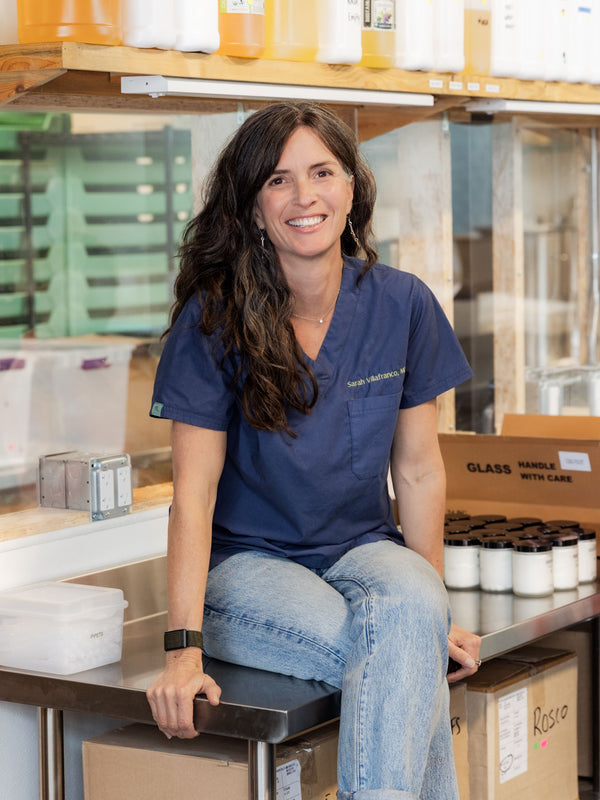


Pregnancy is a precious, terrifying, and thrilling time, when your hormones are jumping around like grasshoppers and everyone you know is assaulting you with well-intentioned but unsolicited advice. Between the “wisdom” being passed down from aunts you’ve never met and the INSANE amount of pregnancy information on the internet, you could work yourself into a worried frenzy before the pee dries on the stick. I was in my medical residency program when I got pregnant with my first daughter, and even I—a well-informed medical doctor—diagnosed myself with about 63 diseases I didn't actually have!
So take a breath and start with this reminder: pregnancy is a time for celebration—and for learning to take great care of yourself so you can take equally great care of someone else.
Common Skin Changes During Pregnancy
Hormones affect oil production, pigment cells, and the structure of the skin itself. Some of the most common pregnancy-related skin concerns include stretch marks, melasma, acne, and generalized itching.
Stretch Marks During Pregnancy
Ask your mom if she has them. That’s all that matters.
You can apply shea butter and nourishing oils to keep your belly skin supple and help relieve itching, but genetics play a huge role in whether stretch marks appear. Keeping the skin well moisturized can help support elasticity and comfort, but unfortunately there is no topical product proven to prevent stretch marks.
Melasma During Pregnancy
Melasma is a pigmentation change—usually darkening of the skin—that can occur during pregnancy and is more common in people with more melanin in their skin. It’s sometimes called “the mask of pregnancy.”
Huge, dorky hats and sunscreen are your best friends when it comes to preventing melasma.
Choose a mineral-based, unscented sunscreen and apply it daily, especially to melasma-prone areas like the forehead, cheeks, upper lip, and edges of the face.
After you deliver, if the pigmentation persists, a dermatologist can help guide treatment options.
Acne During Pregnancy
It’s so unfair. You’re moody, you feel bloated, AND you get zits?
Because big guns like Retin-A, antibiotics, benzoyl peroxide, or salicylic acid are often not recommended during pregnancy, managing acne becomes more about lifestyle and gentle skincare.
Focus on the following:
• reducing inflammatory foods like sugar and dairy
• managing stress
• keeping skin clean
• avoiding pore-clogging ingredients like dimethicone
• not touching your face
Hormonal shifts can dramatically change oil production, so even people who never struggled with acne before pregnancy may experience breakouts.
Skin Itching During Pregnancy
Skin gets itchy during pregnancy for many reasons.
Sometimes it’s simply dryness due to decreased sebum production, which can happen when estrogen levels increase. A balanced diet, adequate hydration, and moisturizing the skin regularly can help keep itching under control.
Persistent itching of the palms and soles could indicate liver issues such as intrahepatic cholestasis of pregnancy, and itchy bumps across the belly and thighs could indicate PUPPP (Pruritic Urticarial Papules and Plaques of Pregnancy), a condition that sounds horrifying but is actually benign. If itching is severe or persistent, talk with your healthcare provider.
For most itchy skin conditions during pregnancy, hot water will make things worse. Stick to lukewarm showers and baths.
Pregnancy-Safe Skincare Ingredients and Guidelines
Maternal instincts kick in quickly when you find out you're pregnant, and you'll find yourself wanting to keep yourself and your growing baby safe. You'll do your homework and exercise caution with sushi and unpasteurized cheeses. You'll wear sensible shoes in the wintertime to prevent falls and drink extra water in the summer.
And then you'll start researching skincare ingredients—and probably be left scratching your head, wondering how on earth to decide what’s safe and what isn’t.
The simple truth is that there is no standardized set of rules to guide you.
So I used my doctor brain to do the homework and create some basic guidelines. I reviewed the available studies and the most reliable sources of information on the topic. I’ve left out fear-mongering—I’ll just let the science speak for itself.
Skincare Ingredients to Avoid During Pregnancy
This is the easy part.
We’ve learned a lot over the past decade about chemicals that may affect hormone signaling, immune function, and fetal development. The ingredients with the most potential to cause problems fall into a few main categories.
Endocrine Disruptors in Skincare
Endocrine disruptors interfere with the normal function of hormone-producing glands such as the thyroid, ovaries, adrenals, and pituitary.
Skincare ingredients with endocrine-disrupting potential include the following:
• parabens
• phthalates
• BPA
• triclosan
• nonylphenol ethoxylates
These chemicals are used in cosmetics for preservation, fragrance stabilization, packaging, surfactant function, and antibacterial effects.
To be fair, these ingredients were not originally introduced with harmful intentions. Everyone wants products that smell good and stay bacteria-free. But science evolves, and our choices should evolve with it.
Research shows that some of these compounds accumulate in human tissues and may influence hormone signaling.
Parabens have been associated with lower birth weight and shorter gestational age in some studies. They're usually found in creams, lotions, hair care, and sunscreens.
Phthalates have been linked to thyroid dysfunction, endometriosis, and possible developmental effects. They're most commonly found in products containing synthetic fragrance, which is in almost every product sold at mainstream stores like Target and Walmart.
These concerns are compelling reasons to avoid endocrine-disrupting chemicals—not just during pregnancy, but in general.
(And while we’re at it, you should probably encourage the people with testicles in your life to stop using synthetic fragrance, too. Phthalates have been associated with reduced sperm quality.)
Skin Irritation During Pregnancy
Three words: sodium lauryl sulfate.
While your skin may have tolerated this ingredient for most of your life, pregnancy hormones can suddenly make the skin far more reactive to this common—and irritating—detergent.
SLS is found in:
• toothpaste
• shampoo
• laundry detergent
• face wash
• body wash
It causes, contributes to, or exacerbates dermatitis, eczema, and psoriasis, and I promise you that if you have not made a conscious effort to get rid of it, you're using it!
Sometimes you’ll see sodium laureth sulfate instead. It’s considered slightly gentler—but it introduces another issue: ethoxylation.
Ethoxylated Ingredients and 1,4-Dioxane Contamination
Ethoxylation is a chemical process used to make ingredients more soluble or stable.
The process uses ethylene oxide, a known carcinogen, and creates a contaminant called 1,4-dioxane. This compound can remain as a trace impurity in finished products.
1,4-dioxane is considered a probable carcinogen and is a significant environmental contaminant, affecting our groundwater and aquatic species.
Ingredients that are commonly ethoxylated include:
• sodium laureth sulfate
• PEG compounds
• polysorbates
• emulsifying wax NF
An easy rule of thumb is to be cautious with ingredients ending in -eth, containing PEG, or containing numbers like polysorbate-20.
Other Ingredients To Use With Caution During Pregnancy
Synthetic colors and petrochemicals fall into this category.
Evidence linking FD&C dyes to developmental or allergy concerns is still emerging, but enough anecdotal evidence exists to justify caution.
Regarding petrochemicals, evidence suggests avoiding the obvious exposures like gasoline, coal tar, and industrial hydrocarbons during pregnancy. However, small amounts of petroleum jelly or mineral oil have not been shown to harm fetal development.

Common Skincare Ingredients and Pregnancy Safety
Retinoids and Retinol During Pregnancy
Retinoids are vitamin A–derived ingredients used to treat acne and improve signs of aging. They include prescription medications like isotretinoin (Accutane, oral) and tretinoin (Retin-A, topical), as well as over-the-counter ingredients such as retinol, retinaldehyde, and retinyl esters.
The concern during pregnancy comes primarily from oral isotretinoin, which is known to cause serious birth defects. Under the former FDA pregnancy classification system, isotretinoin was Category X, meaning the risks clearly outweigh any benefit and it should never be used during pregnancy.
Topical retinoids were historically classified as Category C, meaning animal studies suggested potential risk but human data were limited. Because vitamin A derivatives influence fetal development, most dermatologists and obstetricians recommend avoiding all retinoids during pregnancy as a precaution, even though absorption from topical products is extremely low.
To be safe, avoid products containing:
• retinol
• retinaldehyde
• retinyl palmitate
• tretinoin
• adapalene
• tazarotene
Pregnancy is temporary. Retinoids can usually be reintroduced after pregnancy and breastfeeding if they’re part of your normal skincare routine. In the meantime, you can enjoy gentler forms of Vitamin A.
Is Salicylic Acid Safe During Pregnancy?
Salicylic acid is a beta-hydroxy acid commonly used to treat acne and unclog pores.
High-dose oral salicylates like aspirin are not recommended during pregnancy, which is why the safety of topical salicylic acid sometimes causes confusion. The amount absorbed through the skin from typical skincare products is very small, and occasional use of low-concentration products is generally considered low risk.
That said, because pregnancy already makes skin more reactive, many dermatologists suggest minimizing leave-on exfoliating acids and focusing instead on gentle cleansing, sun protection, and barrier-supportive skincare.
If acne becomes severe during pregnancy, your healthcare provider or dermatologist can help guide safe treatment options.
Is Vitamin C Safe During Pregnancy?
Yes. Vitamin C is generally considered one of the safest active ingredients to use during pregnancy.
Topical vitamin C can help brighten the skin, support collagen production, and reduce the appearance of pigmentation changes like melasma—one of the most common skin concerns during pregnancy.
If your skin becomes more sensitive during pregnancy (which is common), start slowly and stick to well-formulated products designed for sensitive skin.
Is Hyaluronic Acid Safe During Pregnancy?
Hyaluronic acid is safe to use during pregnancy.
Despite the intimidating name, hyaluronic acid is simply a moisture-binding molecule that occurs naturally in the skin. In skincare products, it acts as a humectant, helping the skin attract and retain water.
Pregnancy hormones can make skin drier or more reactive, so ingredients that support hydration and barrier function—like hyaluronic acid—are often very helpful.
Are Essential Oils Safe During Pregnancy?
Essential oils are a gray area.
Some essential oils are traditionally cautioned against during pregnancy, but the scientific evidence behind many of those warnings is limited. In skincare, the most important factor is concentration. Small amounts of properly diluted essential oils in well-formulated products are generally considered low risk for most people. Here's a guide to help you decide what feels safe for you!
That said, pregnancy often makes skin more reactive. If you notice irritation or sensitivity, switching to unscented products is the safest option.
A Simple Pregnancy-Safe Skincare Routine
Pregnancy is not the time to experiment with a complicated routine full of new active ingredients. Your skin barrier is already dealing with major hormonal shifts, so consistency and simplicity are your allies.
A basic pregnancy-safe routine might include a gentle cleanser, a barrier-supportive moisturizer or face oil, and daily mineral sunscreen. If you enjoy using a serum, look for hydrating or antioxidant ingredients like hyaluronic acid or vitamin C rather than aggressive exfoliants.
The goal is calm, supported skin—not chasing dramatic results while your body is doing the much more impressive work of growing a human.
Pregnancy-Safe Osmia Skincare Products
Unscented Products (Also Safe for Newborns)
- Naked Body Soap
- Oh So Soap
- Oh So Detox Soap
-
Naked Body Oil
-
Naked Body Mousse
-
Lip Doctor
-
Detox Exfoliating Mask
-
Purely Calm Gel Toner
Products With Low Concentrations of Pregnancy-Safe Essential Oils
-
All body soaps
-
All facial soaps
- Purely Gentle Mud Cleanser
-
Purely Simple Face Cream
- Restore Facial Serum
-
Balance Facial Serum
- Nectar Nourishing Drops
-
Lip Repair
- Himalayan Body Buff
- Lavender Body Mousse
-
Sunset Body Oil
- Night Body Oil
Osmia Products We Don’t Recommend During Pregnancy
Some essential oils, like parsley and rosemary, are commonly cautioned against during pregnancy, although significant research evidence is limited.
Spotless Blemish Oil
Rosemary Scalp Oil
This is a conservative recommendation, and ultimately becomes a personal decision between you and your healthcare provider.
FAQ: Skincare During Pregnancy
What skincare ingredients should be avoided during pregnancy?
Ingredients commonly avoided during pregnancy include retinoids, endocrine-disrupting chemicals such as parabens and phthalates, sodium lauryl sulfate, and potentially ethoxylated ingredients that may contain 1,4-dioxane. At Osmia, we avoid these ingredients all day, every day, and have since the day we opened our doors.
Is natural skincare always safe during pregnancy?
Not necessarily. Some essential oils and botanical extracts can be irritating or hormonally active. Always review ingredient lists carefully and consult your healthcare provider if you have concerns.
Can pregnancy cause permanent skin changes?
Some changes, like melasma or stretch marks, may persist after pregnancy, though many fade over time. Proper sun protection and barrier support can help minimize long-term effects.
Is acne treatment safe during pregnancy?
Many common acne treatments—including retinoids and certain antibiotics—are not recommended during pregnancy. Gentle cleansing, barrier support, and dietary adjustments are often the safest first steps.
A Simple Pregnancy-Safe Skincare Philosophy
Use beautiful, natural skincare and stick to a less-is-more philosophy.
Your body is experiencing enormous hormonal shifts, so consistency and gentleness matter.
If you want a simple way to reduce chemical exposure, start with the products that cover the largest surface area:
Switch from body wash to a natural bar soap.
Switch from body lotion to body oil applied to wet skin.
And you might want to think about the other products you're using in your home, and how to make sure they contain ingredients you can feel good about for yourself and your growing family.
Last thing: remember that your mom probably used some less-than-perfect products when she was pregnant with you—and you turned out just fine!
Use these guidelines as a framework, not a source of stress. Focus on the miracle happening inside your body. Growing a human is one of the most extraordinary things a body can do.
With much love for you and your growing belly,

The information contained in this post is for educational interest only. This information is not intended to be used for diagnosis or treatment of any physical or mental illness, disease, or skin conditions.
Resources:
Jeddi MZ, Janani L, Memari AH, Akhondzadeh S, Yunesian M. The role of phthalate esters in autism development: A systematic review. Environ Res. 2016 Aug 24;151:493-504
Nishihama Y, Yoshinaga J, Iida A, Konishi S, Imai H, Yoneyama M, Nakajima D,Shiraishi H. Association between paraben exposure and menstrual cycle in femaleuniversity students in Japan. Reprod Toxicol. 2016 Aug;63:107-13.
Geer LA, Pycke BF, Waxenbaum J, Sherer DM, Abulafia O, Halden RU. Association of birth outcomes with fetal exposure to parabens, triclosan and triclocarban in an immigrant population in Brooklyn, New York. J Hazard Mater. 2016 Mar 11. doi:pii:S0304-3894(16)30250-3. 10.1016/j.jhazmat.2016.03.028.
Ozaki H, Sugihara K, Watanabe Y, Ohta S, Kitamura S. Cytochrome P450-inhibitory activity of parabens and phthalates used in consumer products. J Toxicol Sci. 2016;41(4):551-60.
Ihde ES, Loh JM, Rosen L. Association of environmental chemicals & estrogen metabolites in children. BMC Endocr Disord. 2015 Dec 17;15:83. doi:10.1186/s12902-015-0079-1. Erratum in: BMC Endocr Disord. 2016;16:6.
Smarr MM, Kannan K, Buck Louis GM. Endocrine disrupting chemicals andn endometriosis. Fertil Steril. 2016 Jul 15.
Huang PC, Tsai CH, Liang WY, Li SS, Huang HB, Kuo PL. Early Phthalates Exposure in Pregnant Women Is Associated with Alteration of Thyroid Hormones. PLoS One.2016;11(7):e0159398.
Kano H, Umeda Y, Kasai T, Sasaki T, Matsumoto M, Yamazaki K, Nagano K, Arito H, Fukushima S. Carcinogenicity studies of 1,4-dioxane administered in drinking-water to rats and mice for 2 years. Food Chem Toxicol. 2009Nov;47(11):2776-84.
Xu X, Cho SI, Sammel M, You L, Cui S, Huang Y, Ma G, Padungtod C, Pothier L, Niu T, Christiani D, Smith T, Ryan L, Wang L. Association of petrochemical exposure with spontaneous abortion. Occupational and Environmental Medicine. 1998 Jan; 55(1): 31-36