



Do you or someone you know struggle with eczema? This comprehensive article has lots of simple tips to relieve eczema symptoms naturally. If you’re looking for eczema-friendly products but don’t have time to read this whole post, check out our eczema collection here.
What Is Eczema?
The word eczema comes from a Greek root meaning “to boil over”—a fitting image for skin that feels raw, red, and inflamed. According to the National Eczema Association, roughly 15 million Americans live with some form of this non-contagious condition. It affects up to 20% of children and 3% of adults and is often associated with asthma, food sensitivities, or seasonal allergies. The physical discomfort and psychological stress caused by eczema can create a vicious, symptom-worsening cycle.
There are several kinds of eczema.
Atopic Dermatitis
This is the most common form, typically affecting the face and body folds (like elbows and knees). It often appears alongside asthma and/or seasonal allergies—this combo is called the atopic triad.
Contact Dermatitis
This condition is triggered by chronic exposure to irritants or allergens. A common example: red, itchy skin beneath a wedding ring.
Dyshidrotic Eczema
This particularly aggravating form of eczema causes small, maddeningly itchy blisters on the hands, feet, fingers, or toes. I had it once and wanted to attack my skin with sandpaper.
Nummular Eczema
This kind of eczema appears in round patches, often triggered by bug bites or irritation from regularly worn articles of clothing like a bra strap. I’ve had this on my forearm, and a few applications of Night Body Oil always cleared it up.
Seborrheic Dermatitis
This is eczema of the scalp and appears as dry, flaky patches (a.k.a. cradle cap in babies). It’s often tied to immune issues or chronic illness, but can also be caused by topical irritants like shampoo containing sodium lauryl/laureth sulfate.
Stasis Dermatitis
This occurs in the lower legs when circulation is compromised, leading to swelling and chronic skin irritation.

What Is Atopic Dermatitis?
It’s a fancy name for the most common type of eczema—particularly common in people with allergies or asthma.
"Atopic" means "without a place," and "dermatitis" means "inflammation of the skin," so the term essentially means "angry skin anywhere." If your doctor gives you a vague eczema diagnosis, this is usually what they mean.
What Are the Symptoms of Eczema?
- Dry, flaky, itchy patches
- Inflammation or discoloration around the rash
- In infants it's usually on the face or scalp
- In children symptoms occur most often in skin folds like knees, elbows, and ankles
- In adults it's often localized to the hands
Eczema-affected skin has a compromised barrier and is more prone to irritation and infection.
What Causes Eczema?
Eczema doesn’t have a single clear cause. It’s likely a mix of genetics, immune system dysfunction, and environmental triggers.
Some researchers believe the root issue is a genetic defect in skin cells that reduces barrier strength. Others think the immune system misfires, weakening the skin barrier secondarily.
I personally think that synthetic fragrance and sodium lauryl/laureth sulfate are the two most significant causes of eczema in our environment. In all cases, once that barrier breaks down, allergens and microbes can get in, and moisture escapes—leading to chronic inflammation, dryness, and irritation.

Common Eczema Triggers
-Harsh soaps and laundry detergents, which usually contain sodium lauryl/laureth sulfate and synthetic fragrance.
-Dry climates
-Pollen and allergens
-Processed foods or food sensitivities
-Stress (yes, it really matters)
Eczema vs Psoriasis
While both are chronic skin conditions, they differ in cause, symptoms, and appearance.
Eczema
- Often allergy-linked
- More common in children
- Red, flaky patches with softer borders
- Commonly appears behind knees or elbows
Psoriasis
- Autoimmune-driven
- More common in adults
- Sharply defined silvery plaques
- Often affects elbows, knees, and scalp
If you’re unsure which condition you have, a dermatologist can help clarify.
Does Eczema Ever Go Away?
It can.
Some children grow out of it. Some adults experience long remission periods. Others manage it long-term with consistent care.
Flare-ups often occur when stress increases, the barrier becomes compromised, or environmental triggers accumulate.
With thoughtful internal and external support, symptoms can diminish significantly—and sometimes disappear for extended periods.
Can I Cure My Eczema Naturally?
“Cure” is a strong word.
But many people see dramatic improvement, and sometimes total symptom remission, by adopting permanent lifestyle changes and maintaining a clean, barrier-supportive skincare routine.
This guide is designed to help you do exactly that.
Diet and Eczema
Start by reducing inflammatory foods:
- Sugar
- Alcohol
- Ultra-processed snacks
- Excess caffeine
Shift toward these instead:
- Whole plant
- Healthy fats
- High-quality protein
- Omega-3 rich foods
Next, consider a structured elimination trial. Removing wheat, corn, or dairy for 3–4 weeks at a time can help identify food triggers.
I have two friends whose eczema symptoms are entirely dependent on how much corn is in their diet. It’s worth experimenting.
A food journal and photo log are extremely helpful tools.
Supplements for Eczema
Probiotics may reduce inflammation and support barrier repair.
Evening Primrose Oil is widely used, though research is mixed. It absolutely helps keep my perioral dermatitis symptoms at bay.
Black Cumin Seed Oil is rich in thymoquinone, a potent anti-inflammatory. I take it daily and believe it has helped both my eczema and perioral dermatitis.
Always discuss supplements with your healthcare provider, especially if you are pregnant, nursing, or on medication.
What Irritates My Eczema?
SLS (Sodium Lauryl/Laureth Sulfate) is in EVERYTHING, including toothpaste, shampoo, soaps, laundry detergent—it’s a big one to eliminate, and will make a huge difference in your symptoms if you get rid of it completely.
Synthetic Fragrance is another ingredient that's in tons of products, even those marketed as natural. Look for “fragrance” or “parfum” on labels and avoid them.
Other triggers may include parabens, silicones, artificial colors, and ethoxylated ingredients like phenoxyethanol.
Clothing can cause irritation if it's synthetic or scratch. Try to stick to loose, breathable cotton.
Environment can exacerbate things. Try using an air purifier in your home to reduce dust and pet hair, and a humidifier in your bedroom overnight.
Water is what your skin craves, but hot showers are not your friend. Stick to warm water.
Hand hygiene is important, but use cool water, very mild soap, and avoid alcohol-based sanitizers.
Consider formal allergy testing with a licensed healthcare provider. Mail-in tests are prone to false positives and could lead you to cut out foods or products unnecessarily.
Can Stress Make Eczema Worse?
Absolutely.
Stress alters immune function, increases inflammation, and slows healing. Daily stress-reduction habits—whether it’s yoga, reading, long walks, or deep breathing—are essential.
Think of it as skincare from the inside.
Skincare for Eczema-Prone Skin
We’ve formulated products that are safe, gentle, and effective for eczema-prone skin. Each one is made with minimal essential oils, no synthetic fragrance, and nourishing, barrier-supportive ingredients.

Body Soaps
Oh So Body Soap
Oh So Detox Body Soap
Body Moisturizers
Naked Body Oil
Night Body Oil
Naked Body Mousse
Lavender Body Mousse
Cleansers & Face Care
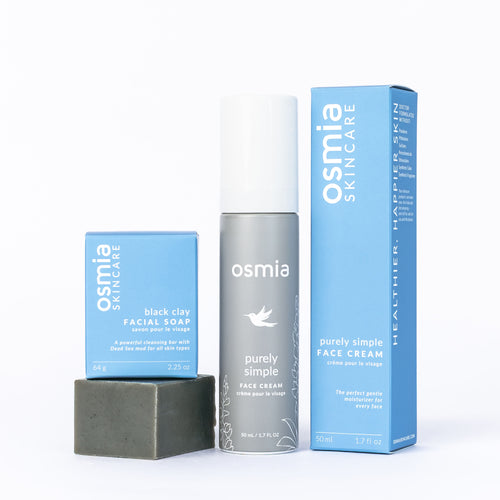
Black Clay Facial Soap
Purely Gentle Mud Cleanser
Purely Calm Gel Toner
Purely Simple Face Cream
Lips
Lip Doctor
Apply body oil while your skin is still wet after the shower. You can also blend oil and mousse in your palm before applying for extra protection.
Frequently Asked Questions About Eczema
What is the fastest way to calm an eczema flare?
Remove irritants immediately, use a gentle cleanser, apply a fragrance-free moisturizer to damp skin, and reduce friction. If severe, consult a healthcare provider about short-term topical steroids.
Is eczema an autoimmune disease?
Atopic dermatitis is not technically classified as an autoimmune disease, but it can involve immune dysregulation and chronic inflammation.
Can probiotics help eczema?
Some research suggests certain probiotic strains may reduce inflammation and improve symptoms, though results vary.
Is eczema contagious?
No. Eczema is not contagious.
Hope this guide helps you get your eczema symptoms under control, and if you need help with choosing products, please email us at help@osmiaskincare.com!
With love—and much less itching—from all of us at Osmia.

The information contained in this post is for educational interest only. This information is not intended to be used for diagnosis or treatment of any physical or mental illness, disease, or skin conditions.
ECZEMA RESOURCES:
https://www.nytimes.com/2017/06/26/health/acne-eczema-skin-bacteria.html
https://nationaleczema.org/eczema/
Kim SO, Ah YM, Yu YM, Choi KH, Shin WG, Lee JY. Effects of probiotics for the treatment of atopic dermatitis: a meta-analysis of randomized controlled trials. Ann Allergy Asthma Immunol. 2014 Aug;113(2):217-26
https://nationaleczema.org/eczema/types-of-eczema/
https://my.clevelandclinic.org/health/diseases/9998-eczema